Post-Construction Cleaning: What to Expect
The last coat of paint is dry, the final fixture is installed, and your renovation or new build is technically finished — except it doesn't feel that way yet. A fine layer of dust covers nearly every surface, protective film is still stuck to your new appliances, and the space feels more like a job site than a home or office ready for use.
That gap between "construction complete" and "ready to use" is exactly what post-construction cleaning closes. Here's what it actually involves.
Why This Isn't the Same as Regular Cleaning
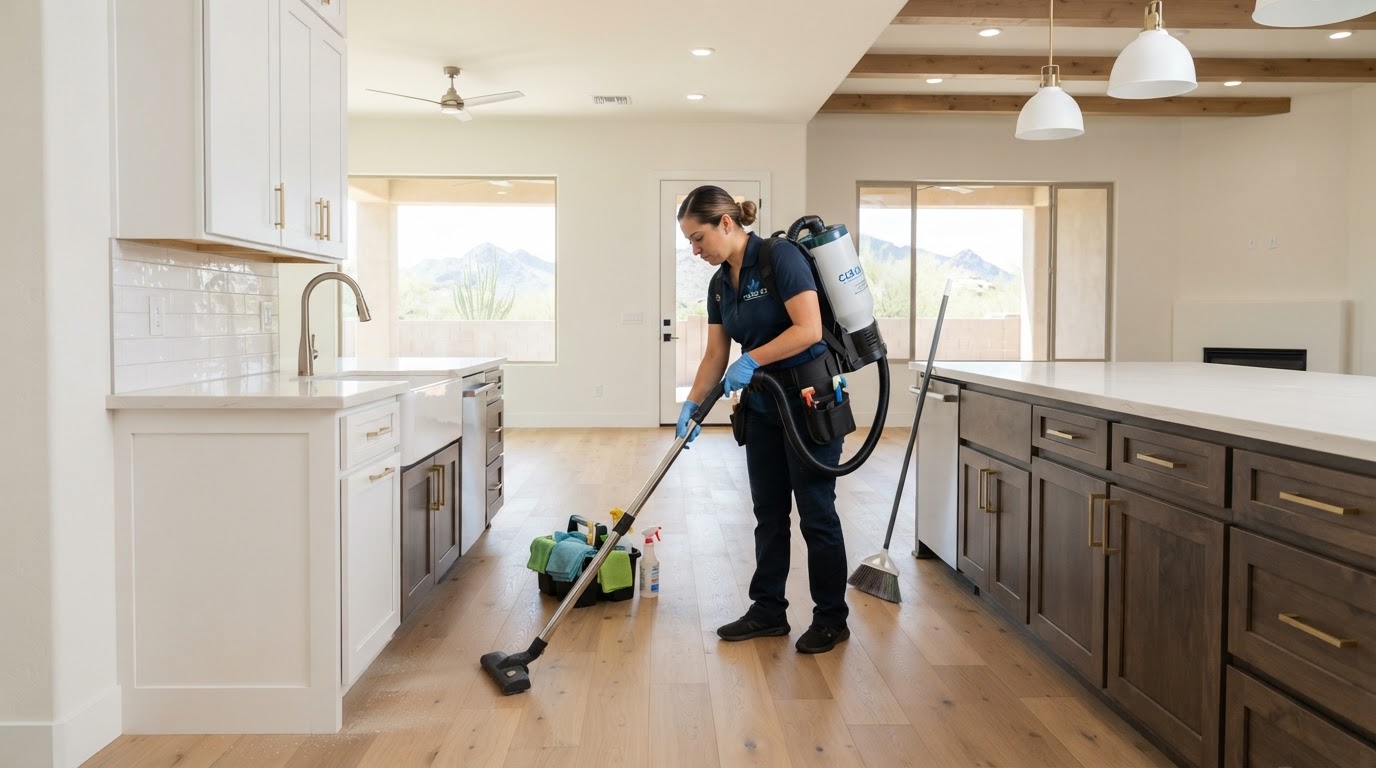
Construction dust isn't like everyday household dust. Drywall dust, sawdust, and fine particulate settle into places a normal cleaning routine doesn't reach — inside vents, behind trim, in light fixtures, and deep in carpet fibers. Standard vacuums also tend to just move fine dust around rather than actually capturing it, which is why post-construction cleaning requires HEPA-filtration equipment that traps particulate instead of re-releasing it into the air.
The Three Phases
Professional post-construction cleaning typically happens in stages, not as a single pass:
Rough Clean — Removes large debris, leftover materials, and heavy dust so the space is workable. This usually happens near the end of the construction process itself.
Detail Clean — The most labor-intensive phase. Every surface, fixture, cabinet, and light fitting gets wiped down and dust is removed from vents, ledges, and corners. This is where the bulk of the transformation happens.
Final Clean — The finishing pass: polishing surfaces, cleaning glass and mirrors, and preparing the space for a final walkthrough or punch list. This is what makes a space look move-in ready rather than just "cleaned."
Skipping ahead in this order doesn't work — detail cleaning a space that's still generating dust just means redoing the work.
What Gets Covered
- Cabinets and drawers, inside and out
- Appliances, degreased and wiped down inside and out
- All light fixtures, switches, and outlet covers
- HVAC vents and returns, where construction dust settles first
- Window tracks, sills, and glass
- Removal of stickers and protective film from new windows, appliances, and cabinetry
- Floors — vacuumed with HEPA filtration first, then finished based on material (hardwood, tile, vinyl, carpet each need different care)
- Bathrooms and any wet areas, fully sanitized
Why Professional Equipment Matters
New surfaces are expensive and sensitive. Marble, hardwood, and fresh grout can be permanently damaged by the wrong product or technique — which is why post-construction cleaning isn't really a DIY job for anything beyond a small single-room project. Between the equipment requirements and the risk of damaging brand-new finishes, professional cleaning is worth it almost every time for a full renovation or new build.
What to Ask Before Hiring
- Do they carry liability insurance covering accidental damage during cleanup? New surfaces mean higher risk if something goes wrong.
- Do they use surface-appropriate products, not harsh chemicals that can damage new finishes?
- Do they have a dedicated post-construction protocol, or is it their standard residential cleaning checklist applied to a construction site? These are not the same job.
- Get the scope of work in writing before booking — this protects you if there's ever a dispute about what was included.
Aligned Cleaning's Post-Construction Process
We run every job through the full rough-to-final process with HEPA-filtration equipment that actually captures fine dust instead of recirculating it — a non-negotiable for construction cleanup, not just a nice-to-have. Every job gets a written scope before we start, so there's no ambiguity about what's covered.
Serving Surprise, El Mirage, Peoria, Goodyear, Sun City, Glendale, Buckeye, Tolleson, Avondale, Litchfield Park, and Waddell.
Ready for a Walkthrough and Free Quote?
Let our team handle the dust so you can enjoy your new space.
